Articles about shooting portraits

Hiring A Photographer


So now that you have decided to hire a professional photographer for your campaign, how can you be sure to get the right shooter for the job? You can Google photographers in your area. But honestly, that rarely gives you any insight to what kind of photographer you are going to get.


The first step in getting the right photographer starts with referrals (whenever possible). Being able to ask someone you trust if they know of someone or if they can recommend someone often leads to getting a good photographer. Photographers get most of their work through referrals and word of mouth. If you don’t know anyone to ask, check your contacts on LinkedIn, at your local chamber of commerce or even your competitors.


North Dorchester Middle School

North Dorchester Middle School


Once you have contacted a few possible people to use, ask for references, copies of their portfolio, ask what type of equipment they use, and take time to meet them. Invite them to your office and get to know them. Are you comfortable with their personality and attitude? Everyone has had experiences with people that are fun to work with and those that aren’t. Quite often this can make or break the success of a project.


One of the things that I prefer to do is to meet with my clients. I want to sit with them, take time to understand their needs. Show them my portfolio book, and see if we are a fit. There have been times when I don’t match a client. When that happens, I try to recommend someone I know that I think may better work with them. I have to admit though that this has only ever happened once in my professional career. The person that I matched the client with did an excellent job and the client was so grateful that they call me back on a shoot that was a better match for us.
 

My goal is to get you the best images for your campaign. If I think there is a best way to do that I will suggest it to you. I want to interact and work with my clients. I want us to be a team and not just a contractor and a client.


Getting the shoot right on site is very important.  You don’t want to hear a photographer say “Oh I will fix that in post production.” Sure post production is important, but getting it right at the shoot is the major influence in getting the shots you need. I can enhance the work in Photoshop, I may even need to blend multiple images into one image that creates the look that we need, but none of that is “fixing.”


Another point to consider when hiring me, does my portfolio portray the type of work you want and need?  Perhaps I may not have shot tea pots before but you like the commercial work I do and like the look and feel of my style. The opposite can be true too. A photographer shoots nothing but kitchenware but you just don’t like the feel of the work.  It generally doesn’t have the feel that you want. You want the photographer to match your message and your style.


The last thing I want to mention is affordability. The reason I saved this for last is because it matters but not as much as the photographer’s ability to get the job done right. A photographer can be the most affordable shooter you have met but if they don’t have the experience, or they can’t get the shots you need, affordability is a moot point. Once you have established that I can do the work for you, then it’s time to make sure the fees are in line with your budget too.


Fees can be flexible to a point too. Rather than get hourly rates, ask for the cost for the job itself. Talk to me about your budget. Don’t be afraid to say that your budget is only $X.xx.  A professional will either meet your budget or explain, in detail, why what you want will cost $Z.zz. Many times by working with me on the details I can adjust the details to help you reach your budget. Sometimes I can’t.  The fact is that if I know what you need and I know the means you have to get it, I can work with you to maximize the project and help you get the best investment possible for your campaign.


Until next time…
Alleviating The Pain

On my LinkedIn.com group, Photography: Clients and Professionals Networking Group, I recently asked “what is the #1 pain point for both Photographers and their clients?” There were some good replies but one stood out above the rest. Julien Mc Roberts, (Julien’s Blog) of Santa Fe New Mexico, made some great points that she collected from her clients. As a working photographer, I am very mindful  of these  points when working with my clients.


Many of  you are on tight schedules where images need to be turned around immediately. Deadlines  these days are getting tighter and tighter. In today’s digital age, there is no technical reason why I as a photographer would take two weeks or more to deliver images. With the tools available today, I deliver the final images in 24-72 hours. I am able to do this because I have developed a production process that allows me to control every aspect from start to finish.


Even though I now have better control over the results of my product, that doesn’t mean that I can just go “CLICK!” and hand over just any image. In order to separate a good image from a great one, some additional fine-tuning is needed to create the superior result you expect. Even in the days of Ansel Adams and before, fine tuning an image creates the ultimate result. But as we are no longer processing film in a dark room, today, that power is at my fingertips via a keyboard and mouse, and it does it faster.


The digital age also gives me the ability to do something that was pointed out by one of Julien’s clients: over deliver. This often results in bonus images. For example: instead of just 10 professional images, I can now present you with 15 or 20 outstanding images! And in turn, you have more choices in delivering your message to your clients.


Now I have to get those images to you. The messenger days are gone. And shipping you those 20 shots is so 90s . There is always of course Email, but that is impractical because most companies Email servers won’t accept large attachments.


Today I have a better faster way.


I choose to deliver my images to my clients via a fulfillment site. This allows you to view each image in a large format on your computer screen, in your office, and on your own time. Then, you select just the images you want. No extra files or piles of photos laying around.


When I am working with my clients, we establish a shot list together. I want to meet your needs.  I am there to help you be creative and assist you in taking it to the next level.


I do research all my potential clients; I most likely started by Googling your firm; taking the time to know a little more about the mission of your company. I want to be able to understand your needs and often, research will tell me a lot of what I need to know.


I can’t think of everything. Tell me, and Julien, what other pain points do you have and how can we eliminate them? All of this helps me help you to get the best results possible.


Until next time…


Happy Shooting!

Putting Your Best Face Forward


So you have decided that you need to update your company’s portraits. Now what? What images are going to show your company in the way you want and what will the images say about you? Not an easy question.


The hardest step has already been taken; you have made the decision. I mentioned in my last post the questions to ask to find the right photographer. Now that you know who you want to capture your company’s face, what type of images?  There are the good old group shots where you have the entire company empty out into the parking lot and stand together, perhaps waving or holding up a banner with the company’s logo or tag line, but that style is a bit dated IMHO.

Learn more and Read more

Questions To Ask Before Hiring A Photographer

At some point everyone hires a photographer or knows someone who will. In many cases it is a portrait or wedding photographer. At other times you may need a photographer to shoot images for anything from real estate to advertising. So how do you know which one is right for your needs?


Most people start out by asking friends, family members or colleagues. You are looking for references and that is the first question you should ask. Does he/she have references? Every professional should have references, especially photographers. But let’s be honest, if you ask me for references I am not going to give you a clients name where we didn’t get along. I am going to give you 3 – 5 names that I think were my best combination of results and compatibility. I want to put my best impression out there after all.


When seeking references, don’t just go by what the photographer says. Before you even ask them for references, look at their website. Do they have a client list on the site? Wedding photographer usually don’t but most commercial photographers should. By looking up those clients and making only a few phone calls you will learn more about the photographer than contacting all the ‘best’ clients he/she uses as references. When you call the clients just ask for the person that handles the advertising. Make sure though that you mention that you are looking for a reference and not looking to sell them advertising! Otherwise you may end up in someone’s voicemail and never actually talk to anyone.


Another question to ask is one for yourself. Do you like their work?  Is the quality of work up to what you want and need? Is the look and feel of the images in the portfolio what you want for your images? I know that I love the work of Joe McNally, Chase Jarvis and Michael Grecco. I think their portraits are outstanding. But if I need images of the corporate tower my company just built or the complex I just designed they may not be the photographer that I need. Make sure the portfolio has the types of images you need. If you need portraits, look at portrait photographers, wedding photographers for weddings, or architectural photographers for structures.


That leads me to the next question. Where can you find the photographers that do the work you want them to do? Of course the first thing many people do is Google “Photographer”. If you just search on ‘photographer’ you will get over 84,000,000 hits. That is not narrowing down the field. Architectural photographer and wedding photographer get 531,000 and 5,070,000 hits respectively. Of course adding your city is going to narrow those results dramatically but you are still going to end up with hundreds, if not thousands of names. If you only look at the first page of each search, you will have only 10 to choose from, but are they the best?  Well they are the best at search engine placement, but are they the best photographers?


The best place to find a photographer is where they hang out. Serious photographers like to hang out with other photographers and many are listed in the associations for photographers. Some of the larger associations have a “Find A Photographer” search engine on their sites. Here is a list of just a few of these groups and their websites.


Association Web Address
Professional Photographers of America (PPA) www.ppa.com
American Society of Picture Professionals (ASPP) www.aspp.com
American Society of Media Photographers (ASMP) www.asmp.org
Advertising Photographers of America  (APA) www.apanational.com
The Association of Photographers (AOP) UK www.the-aop.org
Australian Commercial and Media Photographers (ACMP) AU www.acmp.com.au


Does the photographer you have selected have the equipment needed to do the job correctly? Different types of photography require different tools. Professional equipment comes in all sizes shapes and colors. I can get great results when I use a point-and-shoot consumer camera but will that image transfer to the a billboard sized image as well as it will to the internet? Does the photographer have the ability and tools to control the light properly? Do they have access to a studio appropriate for the shoot?  Shooting toy cars requires much less space than shooting a real car.  Are they going to get the image right at the shoot or do they tell you, “I’ll fix it in Photoshop later.” Post production is a requirement for almost every image, don’t get me wrong; however, post production is the refinement of color and style, not the solution to all problems.


Professionalism is also a very important. Almost every photographer has gotten into the business of photography because of their love of the art. I don’t know any business people that became photographers because it was ‘a great business venture’.  The photographer may be well equipped, they may be able to capture the exact image you need; but that is all irrelevant if the image is delivered late or unprofessionally. You need a photographer who understands your needs and appreciates your business. They have to be willing to listen to you and your needs and translate them into the imagery you want.


Last, but definitely not least is how much should you pay for a good photographer?  Photographers can range in price from a few hundred dollars an hour to tens of thousands. Experience, talent, knowledge and vision all are parts of the cost. These are the intangibles. The tangible is the cost of the studio, the models, the actual products, etc. Add them together and you have your cost, not your expense. The expense is almost irrelevant if you do an advertising campaign that doubles or triples your bottom line. Yet if the same campaign costs you your loyal customers or has little or no return, the expense can be huge.  Put out the wrong image and it can cost you your entire business. For portrait and wedding photographers it comes down to the value of your memories. What is the value of an image if that is the last image ever captured of you and [fill in the blank]? That image is priceless.


The question then is not what you should pay but what can you afford? The images you receive back are investments plain and simple. Just like any other investment they should be planned for and budgeted for. A poor investment results in a poor return. A wise investment can change your world in a positive way. Can you put a price on that?


Until next time…

Portraits? Decisions, Decisions. A Pro Can Help


Remember when you played dress up as a kid? You would put on your parents clothes and pretend to be an adult.  Maybe you wore your mother’s apron or your father’s jacket and tie. The idea was to show you in a different way. Perhaps you were showing what you wanted to be when you grew up.


Now you’re all grown up and you need to get your portrait done. But you hate having your picture taken. Join the crowd. Most people do. Maybe you just don’t know how to get the image of yourself that you want, or you don’t even know what you want the image to say about you. After all, there are all kinds of different portraits. There are studio portraits, business portraits, casual portraits, family portraits, candid portraits, formal portraits, fine art portraits just to name a few! How do you know which type to get for yourself?


The first thing to do in order to get a good quality portrait is the hardest. Make the decision that you want to get a portrait done. Yep, that is the hardest part! The rest is easy, as long as you go to a good professional photographer. Photographers are supposed to know how to find which portrait is best for you. Finding that out starts with a conversation.


I spend time with my clients before the shoot. Many times its on the phone, but whenever possible I like to sit with my clients and get to know them a bit. The idea is that I want to know their needs.  I will ask questions and talk about the answers they give. Some of the things I ask are:


  • What do you want use the image for?
  • What message do you want to send?
  • Is this for business or fun?
  • If for business, what business are you going for?
  • Is this to show accomplishment or drive?


For example, if you are trying to show that you are trust worthy, that you have good business sense and that you have confidence in what you do, you will do a different style photo than if you are trying to say you are a great chef.  At the same time a professional sports coach wants to show that they can be a leader and team builder.


Another type of portrait is the environmental portrait. An example is when a pilot is photographed with a plan in the  background or a surgeon is shot in the operating room wearing their scrubs. These type of images are growing on popularity and in some ways are easy to conceive but at the same time difficult to actually execute. That is why I like to do them. I love a challenge.


Just taking my subject out of the normal studio setting always makes for a more dramatic image. This example of Melody was done on the deck of the upper floor of her home. By taking her out of the studio and using Center City Philadelphia I am able to tell a different story that one of just a smart business woman from the nowhere in particular.


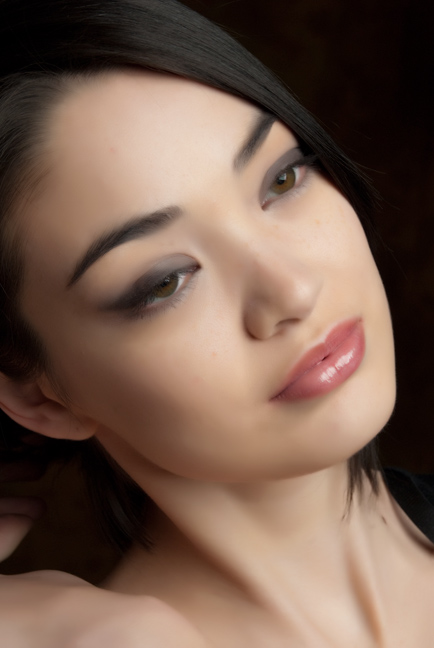
At the same time some studio portraits can be rather dramatic themselves.  By using proper lighting, a well thought out pose and a few transformations in Photoshop, what starts as a standard portrait can be made into a dramatic Hollywood style image. In this image I can almost image Anne saying, “I’m ready for my close-up Mr. DeMille!”


 Even the office can be a dramatic place if the proper lighting is used. This image is a self portrait that I did back in January of this year. In this shot I had a flash to camera left that is focused on my face letting the light fall off dramatically below my chin and upper chest adds to the image. Another aspect is that I am not looking at the camera. By doing this I make the moment seem to have a bit of a voyeur aspect to it. Its as if I was caught thinking about something. Do the images on the monitors behind me play into what is on my mind?


hdr_self_portrait


There are so many options, so many things to do to create an image that gives you a look that you may not even know you have. The idea is to not just show you at your best, but to do it in a way that capture the image you want to portray. Then you get to play. Who doesn’t like to play?


Until next time…

Photography – When ‘Good Enough’ Isn’t

When is “good enough,” good enough?  Hell of a question to ask a perfectionist. But the real answer is actually easy. Good Enough is never good enough.


Seriously though, many businesses think that imagery, video or stills, can be done for less that it traditionally has been done. Because of this many marketing directors and art directors are forced to settle for smaller budgets. They try to make do with less. Less is not more in photography. Less is just, well, less.

Your product or service isn’t just good enough is it? Isn’t your advertising supposed to show your best side, show how you stand above your competition? Let’s look at a few examples. We will get to my images later but first go to Google.com and type in “sneakers” and click the first link that pops up. Top of the list, #1 ranking. Go ahead. I’ll wait. That was fast. Not a bad site, rotating images of, well, sneakers. Now go to Nike.com. I’ll wait. No problem I have time.


When you’re done, I’ll be here.
Wow! Once you get past the language and country, now that is a photograph!  Time was spent conceptualizing and capturing that image. And you have to click to move to the next image. But you want to. You want to see what is the next shot, what do those sneakers look like. They got you. They have you looking and reading and you are curious. Isn’t that putting your best foot forward? (pun intended)


Seriously, the idea of marketing is to set yourself above and beyond your competition. So how is “good enough” setting you apart? If you are just doing something as good as the other guy, why do I want to use you instead of them? What makes you special? Nothing. So I am sticking with them and you just wasted your marketing dollar.


The fact is that by not doing the best you can, you actually waste more money that you think. First you are wasting it on an image that isn’t putting you in front of the pack. That dollar you did spend is possibly killing your entire marketing campaign! You saved a few hundred or a few thousand by hiring your brother-in-law’s kid who has a decent camera, but no training or skills, and you got a shot that is good enough.


Now you put your marketing campaign out there and it doesn’t bring you any new business. What if you get images that are really just average or even above average snapshots, you may even lose a few points of your market share. After all, your version of a Nike type competitor did spend a little more and hired the same pro that did the Nike website images. Now he has your customers. You lost even more.  These images are getting expensive.


You have spent money on your nephew, you spent money on the marketing materials and ads. Maybe you have a marketing department. Well those people don’t work for free. You spent thousands, maybe tens of thousands on a marketing campaign and put in good enough images and now it cost you more than if you did nothing!  You lost all those customers to save a few bucks!


OK let’s say you’re not a business man. You’re just the average Joe working for a living. Maybe good enough is good for you. Probably not. In fact, for you it’s even a bigger hit. Imagine if you hired Uncle Louie to shoot your wedding because you wanted to save a little bit more for the honeymoon. Your images came back flat, lifeless and half the people had their heads cut off in the middle of their foreheads. Your married now and she isn’t happy about those images. The wedding album is on her side of the bed. You’re not.


OK you sprung for the pro photographer at the wedding but you didn’t want to get the baby pictures done by the professional. Guess what. Kids grow up and they do it fast.  Before you know it you’re paying for college tuition rather than diapers. Those first few years aren’t coming back either. You missed the best shots of their lives.


So when is good enough, good enough? Never.


What about those images of mine I said would come later? Check out the portfolio here: https://michaelalbany.com/portfolio/ and tell me. Did these people settle for good enough?


Why are you?


Until next time…

Happy shooting!

Breaking the Rules


As many of the regular readers of this site know, I am a huge fan of HDR (High Dynamic Range) photography. I love how you can create images that really pop and have deep, rich saturation of color.  In many cases, it can be over done to the point of surreal and almost (and in some cases, very) unrealistic. Many believe this is the only way to do HDR; it is the “HDR Rule.”


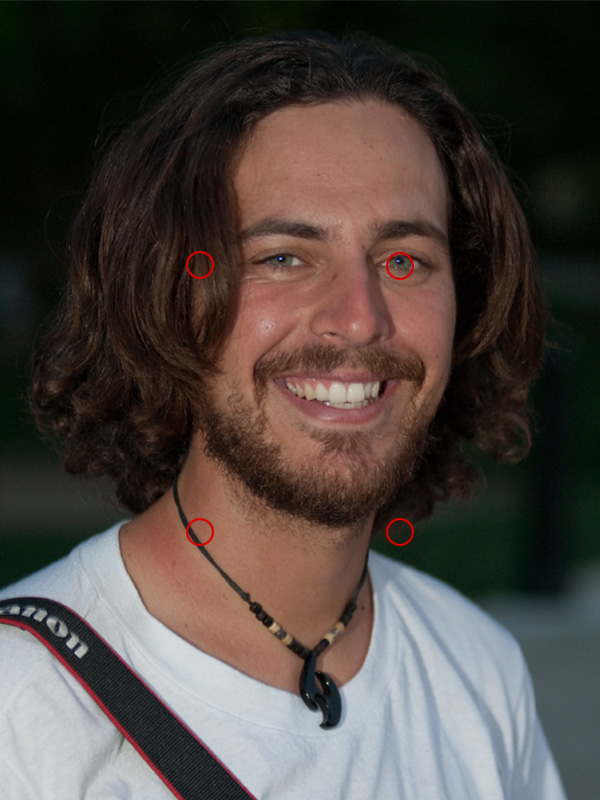
Another rule is the Rule of Thirds. In the rule of thirds the thinking is that you should divide an image into thirds or 9 cells as the image below shows. In the final image that you present it is strongly suggested that pour points of interest (POI) should be along those lines and even better, where they intersect (the red circles).


This rule is not a hard fast rule but one that is “strongly suggested.” Many images you have seen break this rule.  More however, almost break the rule. They way they will do this is to place a person into the image center but keep the eyes on the third mark and perhaps place one of the eyes over the POI intersection.  The latter is usually done by using a fast lens (2.8 or 1.4) and keeping the depth of field so shallow that one eye is softer and less sharp than the other eye. The sharper eye is then placed over the POI intersection to grab your attention.

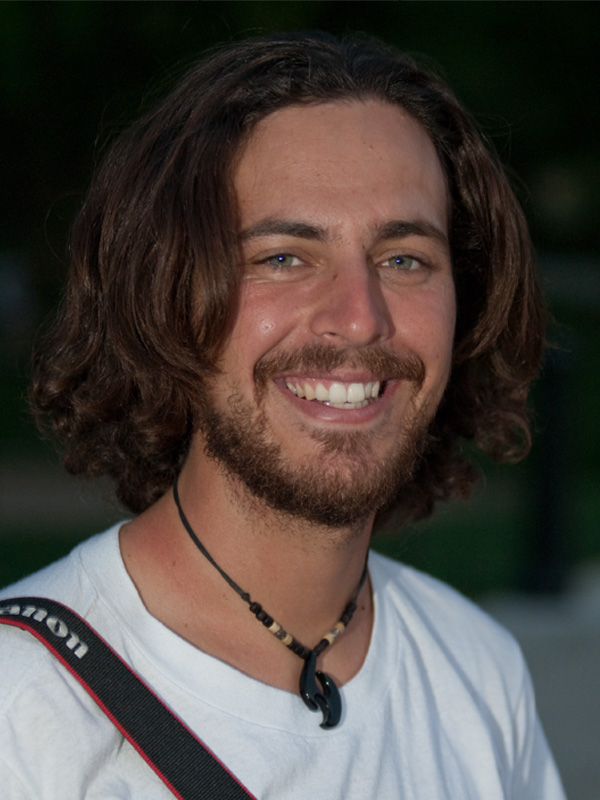
This image I took this past weekend of a really nice guy I met in DC while shooting the Lincoln Memorial is a perfect example. Victor is from Holland and I have to give him a nod as he is traveling the US before starting his career this come summer. If all Dutch are as intelligent and friendly as Victor I am moving. Enjoy the rest of your trip Victor!


Anyway, back to my point. The image above shows Victor in the middle of the shot, however his eyes are on the top third parallel. In fact, his left eye (on our right) is exactly over the upper right POI. I superimposed the first image over Victor to show what I mean.


Obviously the image of Victor is not HDR. But whether your image is of people, still life or anything this rule is applied more often than not. The same is true of the over saturation and uber sharpening of what is called HDR. The reality is that HDR is High Dynamic Range, not High Reality Delusion.


In the image below I break another rule too. The rule that, “The horizon line should never divide the image in half.” This is just a variation of the rule of thirds so I won’t go into it again. Keep in mind this image is a composite HDR image made up of 4 separate images processed in the same fashion that I mentioned in my last blog post. Let’s look at the rules that have been broken here.


  • HDR Rule of Surrealism
  • Horizon Center Division
  • Rule of Thirds (sort of)


In fact, although I did separate the image in the center with the edge of the reflecting pool, and I created realistic saturation, I didn’t really break the Rule of Thirds. In fact, I multiplied it. Notice the Capitol Building. Not only is it the main subject in the upper third of the image, but so is the reflection of the building in the lower third. This actually broaches on another rule of only having one main subject per image. In fact, I do have only one main subject, I just have it twice. Does that break that rule too?

The main point of this post is simple. Rules are meant to be broken. The idea is to know the rules so that when you break them, you have a reason and purpose in doing so. Take the time to learn all the rules you can, study how they work, then go out and break them to show only a positive result.


How are you going to break the rules today? Leave a comment to tell us.


Until next time…

Happy Shooting!

Hear That Noise? – More 1 Handed Photoshop


In this week’s video tutorial I take a look at noise and the different ways to reduce it. In the past, I thought that Photoshop, Camera Raw or Lightroom could clean up noise fairly well, and they can. Severe noise was another story and I thought I was just stuck with it. But then I learned what 3rd party plugins could do.

Talk about a difference! I was able to save images that I thought were lost to the noise. I mean we were talking the image versions of a heavy metal concert. Then I had a shoot where I got nothing but noise all day long. Shot after shot of noise infested images.

Check out the video and what I do about noise by clicking the link.
I broke down in desperation and bought Noiseware from Imagenomic (they also make Portraiture). I got it because I got a discount on it from being a member of NAPP. OMG what a difference! This stuff was astounding. It literally saved my entire day of shooting. From none of the image being usable to all of them being usable!

Then last week I got the most recent copy of Digital Photo Pro and they had a short piece on reducing noise. I thought “Great! I can use noise and maybe some of their tips for my next blog post. Their tips didn’t really work for me. The first step in the tutorial is very similar to what they were suggesting. Watch the video and see how it turned out.

So now you know why I use plugins. Simply put, they work. And if they save me time and effort and they work better, buy them. You will never look back. It’s not important that you buy the same versions I use. Get what works for you and your work flow. These are just what works for me. most have trial versions that you can try out so give them a shot!

Until next time…

Happy Shooting!

Itailian Press – Thank You.

It seems that the “Free Business Portraits for the Unemployed” is a great topic of discussion in the Italian media. I found out this morning that yesterday I was featured in a blog about jobs and employment. The article is here: blog.cercalavoro.it.

I have been in some of Italy’s top newspapers and I will be featured in a Italian magazine within the next week or two and now this as well.

I went ahead and used Google Translator to translate yesterday’s blog post into English. It’s not a perfect translation but you can get the point. If any of my readers know Italian and want to have a crack at translating more accurately let me know. In the mean time, click the link to read the English(ish) version (Thank you Google!).

Read more

1 Handed Photoshop Part 3 – Edge Effects

Well, I am still in a cast and I am still doing everything one handed. The advantage I have over last week is moving my fingers is easier so i may be able to get this post typed in in less than a day! Check back at the end and see how I did.

This week I thought we would do some finishing touches on our image of James, popular guy that he is, I am getting tired of looking at him. So this week its Edge Effects! It seems that everyone wants to know how to do the best edge effect. Well that depends on a few things, the image, the look you want and how you wan the image to be seen. All depend on you!

Click the link to see the video
Read more