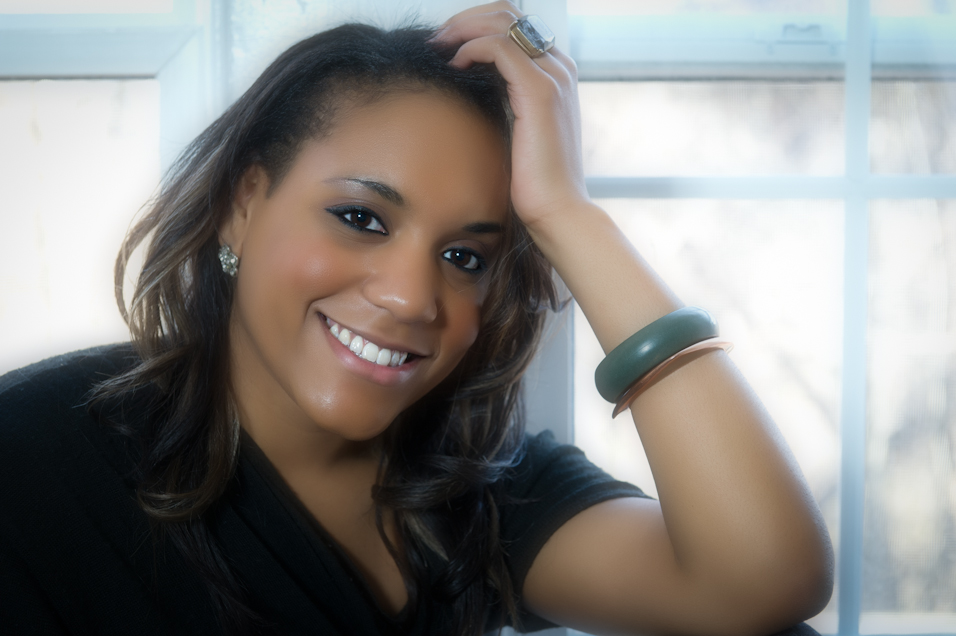
Articles about shooting portraits

Why Harry Potter Is Actually a Photographer

My wife is a huge Harry Potter fan and hasn’t missed a single book or movie. She follows the info on the internet to get peaks into how close the movies will be like the books. She gets lost in the books and movies and she is a huge JK Rowling fan.


So in honor of my wife, JK Rowling and the last Harry Potter movie, Harry Potter and the Deathly Hallows – Part 2, I wanted to say that I think that Harry Potter is actually a photographer.  Let me do a little comparison.


  • Harry Potter goes into a situation only having a very general idea of what needs to be done. All he really knows is that the end result will be good.
  • A Photographer goes into a shoot knowing only that he needs good results and has only a general idea of what the situation will be. (Especially true for wedding and event photogs)


  • Harry brings out the best in people like Neville Longbottom.
  • A Photographer needs to make everyone look their best.


  • Harry finds beauty in the oddities like Luna Lovegood.
  • A Photographer loves the joy in finding beauty in the oddest things.

Read more

Light (Not Time) Is Money

A couple of weeks ago I posted an article called Recipe Of Light where I made an analogy comparing photography with cooking and great photographers with world class chefs.  The comments ranged widely from photographers, clients and mentors. Each had something to say about my points and views. I heard everything from “You should use the analogy of an automobile because people can relate to how cars require gasoline and maintenance,” to “Great quality is not a requirement for most people.” One photographer even pointed out all the ‘ingredients’ I didn’t mention.


Perhaps I did over simplify the idea a bit but of all the comments I received, One comment that I wanted to reply to was, “And all it takes to be a surgeon is a scalpel, so why is open-heart surgery so expensive?” half-jokingly I said “it’s the lights!”  For the physician it is obviously not about light but for photographers it is all about the light.


As a professional photographer I have studied the science of light, the subtleties, the colors, temperatures, angles, reflections and how light can make or break an image.  For photographers it is indeed all about the light, its quality and how it can bring out the emotion that we want it to. I know many a photographer that has studied the science of light, the art and the craft of photography for longer than some physicians have been in practice.


To be able to create an image takes many skills. Knowledge of light is only one of the elements of a great photograph. As a photographer I am a man of many hats; I need to be a counselor, composer, laborer, manager, director, producer, artist and today a computer tech too. All of these things are wrapped into any good professional photographer. After all I have to relax my subject, design the right image first in my mind then at the shoot. Sometimes I have to construct the ‘stage’ as it were, direct the actors, process the images and do it all in an artistic way that conveys the message my client needs.


Above all of that I have to know how the light is going to interact with the subjects and how it will interact with all of the actors in my production.  Light is a very good actor but it is one that has its own motivation; it has to be coerced into performing the way I need it to. To understand it, to speak the language of light, takes practice and a talent.


When you see an image where all these factors come together to create a wonderful image that tells the story the photographer wants told the talent is often over simplified. Non photographers will say “wow they are a good photographer.” Even other photographers will simplify the gift and talent by saying; they have “the eye.” They have the ability to harness the acting ability of the best, and the worst, actor of all: light.


Creating images that capture moments is easy: take off the lens cap and click, a moment captured. Capture a story in a moment? That takes time.


What story can I tell for you?

Life Without Images


What would it be like to live without images, pictures, photographs? There is an ad on TV that says we can now watch a newspaper, listen to a magazine or watch a phone conversation. Now everything is about the user experience and the interaction between technology and the user.


Today I write a weekly blog because of technology. There was a time in my life where reading a book was a chore. I didn’t like to read books; I preferred magazines. Magazines had pictures and I loved looking at all them. The images could take me to faraway lands and show me what they looked like; show me what the people wore or what they did. Sure, words can do that too but images can do it faster.

Now we write almost everything. There are millions of blogs on the internet (thank you for reading this one), we write emails and on Facebook walls, we text – we write a lot. My wife would rather text than make a phone call. But when we pick up a magazine or a newspaper we immediately look for the images. Images can tell us the overall story faster; they get our attention on newsstands as we walk by writing our texts to our spouses or our kids. Images have to be powerful to be able to pull our attention away from all those messages we are reading and writing.


We like images so much we invent them too. We create icons to represent sending test messages and emails. We have icons to open programs that allow us to write emails or blog posts. We fill our computer screens with images of our children, pets and places we love. We have images everywhere.


So what if all of a sudden images just disappeared? Maybe you recall the scene in Harry Potter and the Deathly Hallows Part 1 where Hermione casts the spell “Obliviate” and she starts to fade from all the pictures in her parents’ home. What if all the images we see every day began to fade away like that? What would grab our attention and distract us from our words and messages?


Imagine a billboard along the highway without an image Sure there are some out there like that but do you actually read all of the text? If you need an image but none are available (Obliviate!), how do you get the same message across?  In a short amount of time, you don’t. If you put all the text up there then anyone who tries to read it all will end up in a ditch!


If images were no longer available the newspapers would not catch your attention, webpages would be dull and lifeless and the magazines I read as a kid would just be short books.


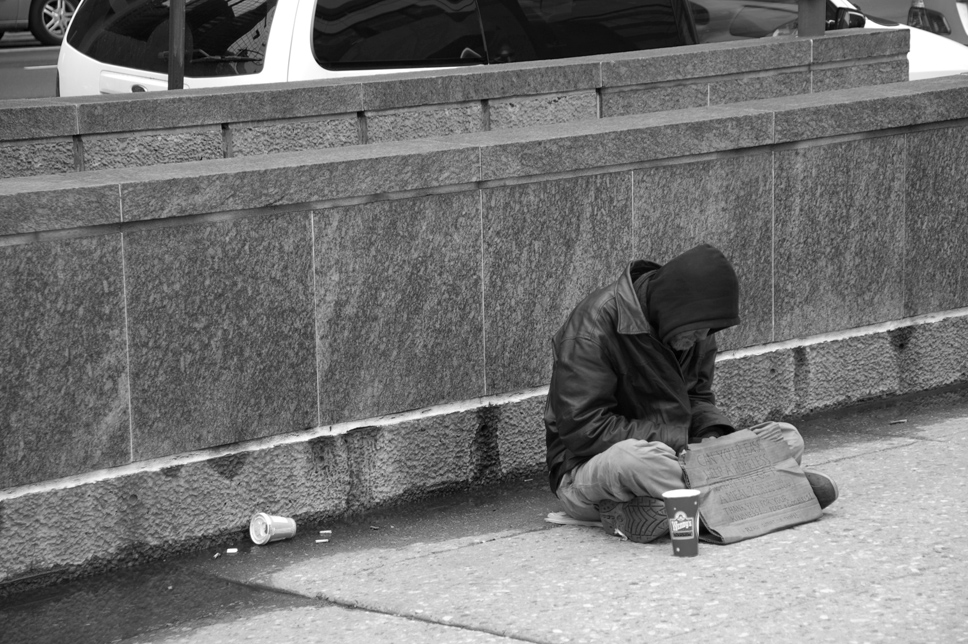
Imagine for a moment trying to describe this image, on a billboard, on a website or a newspaper. Can it be done in just a few words? Do the words, “Homeless man sitting on sidewalk” really tell the story?


Not to me. This image has an impact on me in so many ways. Even the words on his sign that are contained in it tell me more. “Can you help a homeless V. Nam vet get a meal? (On waiting list for VA Hosp. Thank you for your kindness! Peace and God Bless! *Please Support our troops*” but even those are just words. His posture, the hoody over his face, all tell me how this man has been humbled and he doesn’t want to be there; it hurts him to be there. Add in the water behind him, the trash and cigarette butts, even the paper he is sitting on; all tell a part of the story. None of those elements alone tell the story completely. The entire image, the surroundings and the ‘feel’ of the image say so much more. Words tell the facts; the image has impact upon you and your feelings.


So what is it you want to say? Let me help you say it, with images.


Recipe Of Light


Recently I was working with a potential client and a number of issues came up that seem to come up time and time again.  The client said, “With digital, taking pictures is free or next to it. Why are photography prices so high?” They were truly under the impression that to take a photograph costs nothing other than the cost of the camera. Mostly they believed this because that is what the manufacturers of cameras want you to believe.


In fact just to take a digital photograph only takes the cost of a camera. The issue begins when you want to do something with the image you have captured. You need to upload the image somewhere and that takes a computer usually. Then what if you want to fix something in the image? Now you need software. If you want to print the image, well then you need a printer too, either yours or the local print shop.


Let’s just look at cameras for a moment.  Sure you can pick up a pocket, point and shoot camera and take a snapshot. The results you get are a lot better than they were with your last film camera too, but are they professional quality? Probably not. But you could get one of those cameras advertised on TV where the guy is running around snapping pictures everywhere of the model types at the party or the models on a runway. Again, a better image than your last entry level SLR film camera but pro quality? Maybe a few of your images are better than the pocket camera. At least as a professional I hope so!
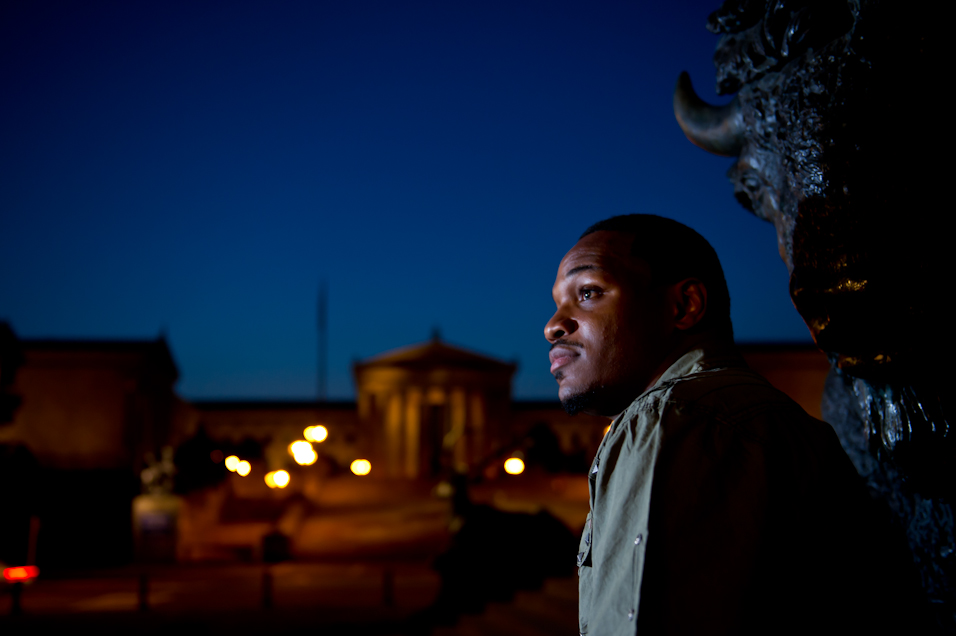
 

All cameras are not created equal and I am not speaking about Canon vs. Nikon vs. Pentax vs. Leica vs. Kodak or any other brand. I mean point and shoot versus enthusiast level vs. professional level cameras.  If they are there are a whole lot of people, not just professionals that have been fooled and taken to the cleaners! In fact there are many differences and those differences justify the price differences.


I won’t go into all the differences such as sensor sizes and pixel ratios and, and, and. If you want those there are plenty of resources on the internet that can teach that to you, just Google it. For a now lets just say there are differences; now there is the question of what those differences can get you. Well I can get my $5,200 camera to take a picture that looks very much like your $300 camera, I just set it to Auto everything and the results will be pretty similar.


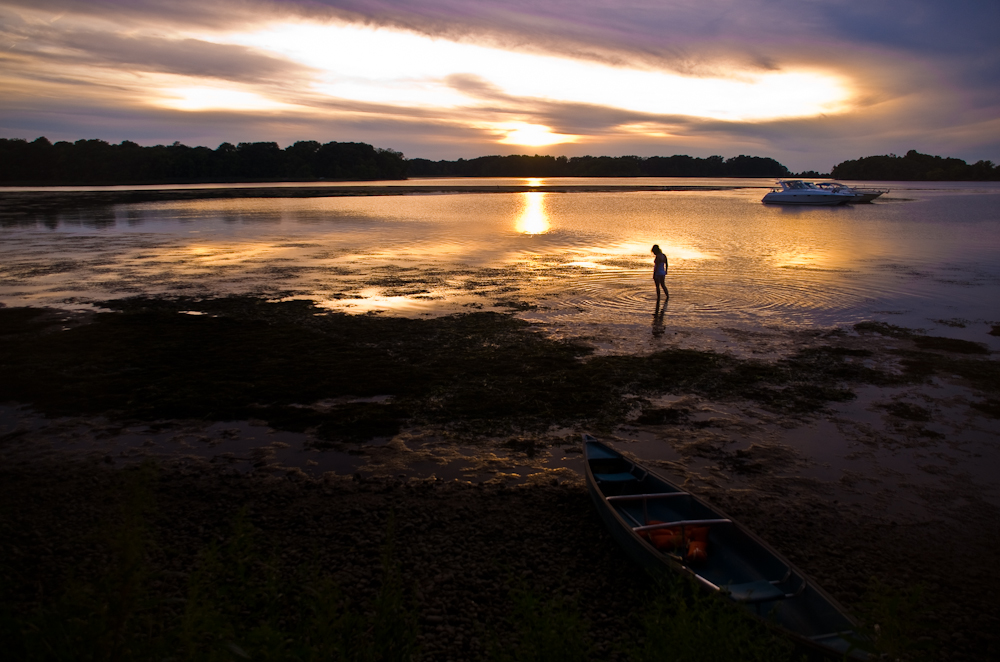
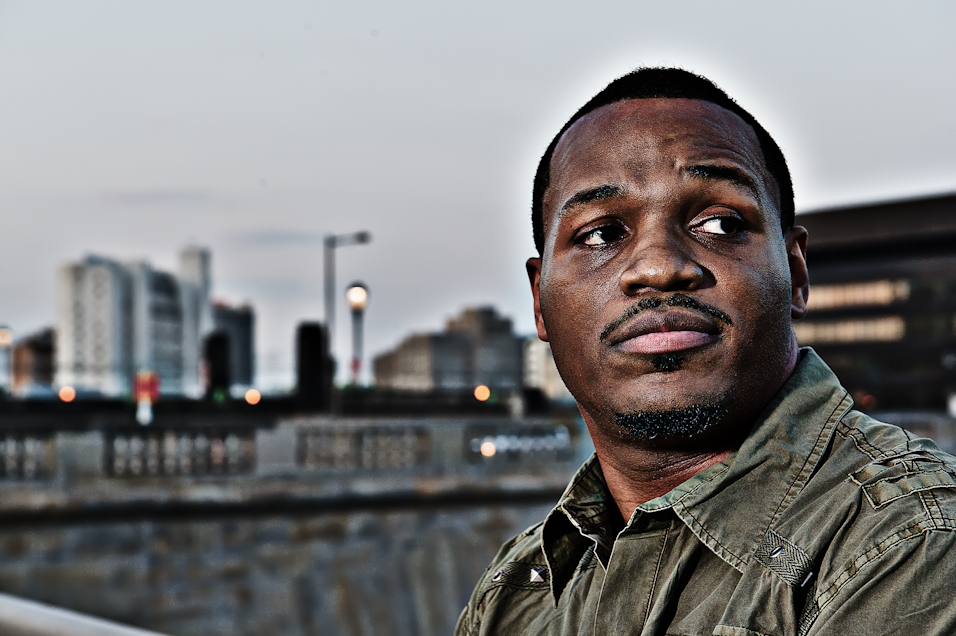
But the advantage of a professional DSLR is the control I have over it; over every aspect of exposure and light. Now I can begin to create, not just take snapshots. Creating an image doesn’t end there. Sure I would like to get the image perfect in camera every time. We live in an age where “Photoshopped” is a new word in the dictionary. That implies more can be done to an image than what the camera is capable of, and that is true.  It doesn’t stop there, there are other tools like Lightroom, Photomatix, and plugins like Portraiture, Nik Software Suite  (5 separate plugins) and thousands of others. Each combination can take a similar image and make it completely different like the different images of Hasign in this post. Both were taken on the same evening about an hour or two apart, both have similar ingredients but the results are completely different.  It’s a bit like food, thousands of options, billions of combinations.
 

Comparing photography to food, sure you can make a great meal at home. In fact you can do it cheaper than if you go to a restaurant. In fact you can even produce something that is as good as any 5 star chef, sometimes. The chef on the other hand can create that wonderful, mouthwatering meal every day, time and time again. As the chef gains experience he will experiment and create new dishes and perhaps even a new style of cuisine that you can almost taste just with a whiff of it being prepared.  Over years of training the chef has learned what ingredients go together and what compliments rather than covers.


Sure you can try to make the same dish at home but often you are just a little different in your results. I’m not saying the meal is less than fantastic, but it’s just not the same as when the chef made it. You have to try though because you want to know if you can. Besides, going out for 5 star meals can get quite expensive quite quickly and by trying it at home, your results may differ, but your budget is kept intact.


Photography is very similar in that professional photographers create a recipe if light and shadow, dark and bright, soft and hard light. We cook, we simmer, we blend the ingredients until we find the perfect recipe and then we capture it, add a few select side dishes of technique and post processing. We tantalize the visual palate as the chef tickles your taste buds.  And yes we have those secret ingredients that are ours and ours alone. After all those are the signatures of each professional.


So what can I cook up for you today?
WTF Is That?

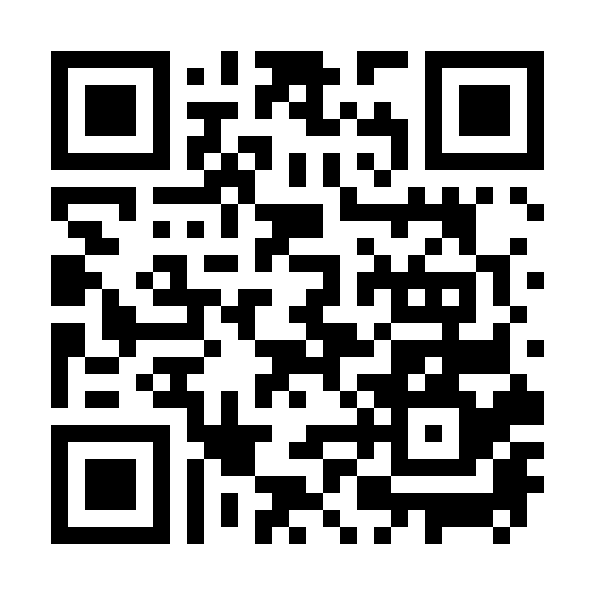
Are you getting confused or excited about seeing these odd graphics starting to pop up all over the place?  Do you even know what they are? They are called QR (Quick Response) codes. I mean with that name it makes me think of an alternative to dialing 911. Instead it’s a way to have you dial Michael Albany Photography-11!


Just think, you decide you have an urgent need for a portrait or some architectural shots. You just scan the QR code and you are instantly connected to my QR page. You highlight my phone number with you smart phone and hit dial. I answer and you can find out how fast I can get that new portrait for your dating profile or I get to the new school your team just completed. Classes start the next day so you need those shots now before the kids take over and ruin all that hard work with muddy shoes and spilled juice.


Seriously though, these little cubes of overgrown pixels actually do mean something to your smart phone. You will need a QR Code Reader App to decode them but they can lead to all kinds of treasures. Companies can put out a special sale that is only available to those who decode the QR and go to their website or sale announcement. If your company starts to use these things this way the possibilities can be virtually endless.


You think that these things are ugly or boring?  Well perhaps, but that is changing too. There are custom QR Codes available that include your logo or some other graphic. Some QR creators are starting to incorporate color too. Everything comes at a price though and recognition can drop to as low as 60% when colors are used; the jury is still out on the custom codes. To help with recognition your QR should be at least 1 inch by 1 inch and it is best to at least make sure there is a very high contrast between the matrix and its background.


An entire industry is growing around these confusing little squares. Maybe I shouldn’t say little though; they have been seen on billboards and on huge signs in places like New York’s Time Square. No matter the size you are sure to see many more around as they become more and more accepted. In places like Japan, the Netherlands, and South Korea they are just another part of the urban landscape.


So to do my part and help build new industries, to create jobs throughout our country, I am now using my very own QR Code. Yep that is mine up there. Scan it and see a special offer that is only available through my QR page.

The only thing that worries me about these things is what happens when the younger generation starts starring at them. Will they be able to translate them without a reader?  If so, what messages will they start sending to each other… about us?

No What Ifs


I hear it all the time and I wonder why.  People are constantly asking the same question and I understand it but I don’t know why they are constantly asking the same old question. I mean, why wonder about it? Do something about it. It seems like I hear it even more frequently now too. You meet someone and you get to talking about this or that and then they say it. “What if…?”


‘What if’ is the one question I have spent my life trying to avoid asking. Throughout my life I have had my fill of difficulties and I have gotten to those points in life where I have to choose which path to take. The question I ask myself is what path will lead me to the least what ifs.


When I left the corporate world, more with a shove than a step, I asked myself what is next for me?  If I got another corporate position I would still make a good living but what good is that “living” if I have no life?  Is it good to be able to pay your bills and not do what you love; to be unhappy, probably downright miserable, 8 hours (or more) a day? Would I be asking myself that question, ‘What if?’ The answer was yes I would.

I needed to pursue my dreams, my passions; I needed to do what made me happy, not some executive or manager. So I chose the path that asked the question the least. If I went back into the corporate world I would do well and I would pay the bills and, and, and. In my later years I would ask myself, “What if I had given it all up and started my own photography business? Would I have been successful?”


I don’t want to wonder what life would be like if I made different decisions and I don’t do that when I work for my clients. If you hire me to do a job, whether that is shooting the headshots of all the C level execs or if it is creating images of your latest project, I won’t go in wondering what I am going to do. I will come in with an idea and a plan of action. I know the direction I want to take it. If we have planned it together and we have done the due diligence that we should do, rest assured that the images you need are going to be there and I am going to do my best to exceed your expectations. I am going to try to over deliver and I am going to avoid any problems I can.


My goal in everything I do, especially my work, is to avoid asking that question. Nothing gets to me more than if I were to deliver the high quality images I have created for you and then have you say, “What if you had shot it this way?”


The best way for me to avoid the ‘What If’ is to ask a better question, “If I do it this way, will I have any what ifs?” if the answer is yes, then that is the wrong way. You can’t afford them and I can’t stand them. So let’s do something together that doesn’t ask what if but is your vision.

RFPs – The Incomplete Story

I can honestly say that at least 60% of the RFPs I am asked to respond to are incomplete. This makes it difficult, if not impossible, to even respond to them. How can I honestly and completely respond with an accurate proposal when I don’t know all the information?  Most of the time the requester will include a statement to the effect of, “If you have any questions please don’t hesitate to ask.” Which is fine if they respond to those requests for information; which they often do not.


For photography RFPs I need to know certain information. Things like the number of attendees and the length of the event are always included, but details are often left out. In order to capture an event and get the results the client (you) wants, I have to know what it is you want!

  • Do you want a feeling of the event as a whole?
  • Would you like the event to be capture in a journalistic fashion or do you want more of a celebratory tone?
  • Will you need to capture the speakers/presenters as they are presenting?
  • If so, what is the intended schedule? Will any of them be speaking at the same time in separate rooms?
  • What is the venue like? Do I need to access it prior to the event to set up lighting?
  • If this is a large (especially a multi-day) event, what is the overall scope so I know if I need to bring in a second photographer?
  • Is there going to be a portrait session for the presenters or the guests?
  • If so will there be a logo or banner that needs to be included in each portrait or am I to provide a backdrop for that?
  • Will I be assigned a space to do these portraits or am I doing them “on the fly”?


This is just a very short list of details that I need to know to be accurate in my proposal. If an event is in the planning process I totally understand that you may not have many of these details as of yet. That’s fine, but remember that one photographer providing a response may include all of these options with costs included while another may include none of them and provide a lower bid.


The better RFP will include something of these details but include a statement to the effect of “details of the event are subject to change. We would like to work with the service provider to plan for these contingencies and we will adjust the RFP and proposal accordingly.”


To have a provider bid on certain guidelines and then during the event ask them to add services (such as portraits for example) requires a compromise on both sides. The reason for this is that if I plan on being as efficient as possible then I will have to sacrifice some duty in order to fill this on site request. It is my job as a professional to respond to your request and to tell you the consequences as to what it will effect, whether that is services planned, cost or whatever. Some requests will have minimal impact, some major, but it is my job to tell you what they will be.


At the same time I have to ask that my clients be prepared for changes when they make such requests. However if we sit down and plan the services to be delivered in advance we can minimize those changes. The issue is that if I respond to a bid that doesn’t include XYZ, when XYZ is proposed I am going to have to change the cost of the bid.


This is where problems usually arise. Clients say things like, “well you said it would cost this!” Yes but that did not include XYZ.


I know that some photographers can be a bit dramatic and get huffy. To them I say get over it. Scopes change and they need to learn to expect that in the career they have chosen. You as the client have the power to dictate the services that I will provide. However, please be aware that in order for me to quote you properly on those services I have to know what they are. If something new arises, I will have to charge for additional services.

Hiring An Event Photographer

Recently on one of the lists I belong to there were some questions on hiring an Event Photographer. I offered some suggestions that I thought would be appropriate for a more permanent home here on my blog.  Take a moment to read my response and let me know your thoughts or questions.


Dear S,


I am a professional photographer and have been shooting events professionally for over 8 years. I wanted to take a moment to address your questions about finding an event photographer.


I read one reply that someone said they paid $1500 for a 3 day event. I can tell you right away that although she got a heck of a deal, she was not dealing with an experienced professional. At that price the photographer in question is going to have problems replacing their equipment when the time comes and that doesn’t take into consideration their operating expenses.
Event photography is very similar to wedding photography with a little less pressure on the photographer. The reduction of pressure comes from not having to capture shots of Aunt Sally and Uncle Bill, who haven’t spoken for 30 years, actually dancing together. At the same time there is a pressure to get all the shots that will represent the event correctly and positively. The day to day shooting though is similar in the number of shots taken and processed each day. This can total literally thousands of shots over a 2.5 day event. Each shot has to be color corrected and then determined if it is worth final editing and presentation to you, the client. This can take longer than the actual event – sometimes as much as 3 times longer. So for your 2.5 day event, a good professional photographer can spend over a week prepping the images for delivery.


It is true that you can hire a photographer who is not a full time shooter or one who is new to the business that will cost you less, however at the same time that person may cost you more money in the long run if they don’t have the experience to capture the event correctly. If they are of the artistic mindset it is not unusual for them to capture the event in such a way that none of the images are useful to you at all. So if this person only charges you $1500 but few if any of the images are useful what is the true cost? If you are planning to use the images for marketing the cost can be astronomical.


My suggestion is to look at the responses from your RFP and look into the portfolio of each photographer. This can be done very quickly and it will save you huge headaches in the long run. Things you should look for are varied but below is a short list that applies across the board.


•             Make sure that any online presence is hosted by the photographer. Sites host by Flickr, SmugMug, Zenfolio, or any other third party will show either a lack of commitment and/or experience. Eliminate these bidders first.

•             Look at the style of work and that you like that style!

•             Make sure that they have events on their website. If they don’t but they have an overall style you like ask for a sample of event work. Some photogs shoot events but don’t specialize in events. My site for example shows the work I specialize in, architectural and portrait. I do shoot events and I have thousands of images to show my abilities but I don’t advertise them on my site because that is not the main focus of my business.

•             Ask for references. Testimonials will be a good quick view but remember: if there is a testimonial on a photogs site they are showing the best of the best. References will be more honest when you contact them directly.

•             Ask for an insurance rider. Professionals will already have liability for at least $1million and getting a rider in your name should be an easy task for them. If they don’t have insurance don’t walk, but run away.

•             Spend 5-10 minutes on the phone with them (more if you have time) and make sure that they ask the right questions and more importantly that you like them! My father said when I was young that “you don’t go fishing with a captain that you don’t like because you won’t catch any fish.” The same is true for your service providers.  If you don’t get along the chances are reduced that they will work with and for you to get you the results you need.


Now you may be asking: why is this guy from Philadelphia writing and telling me all of this? There is no way you are going to hire him. He is just too far away if nothing else. There are many reasons but the main reason is that clients like you are being taken advantage of by inexperienced ‘wannabees’. These inexperienced shooters are trashing the reputation of my industry and I feel it is my job to assist anyone who has questions about hiring a professional photographer.

Always feel free to call me with any questions you may have.

Are You (re)Touched?


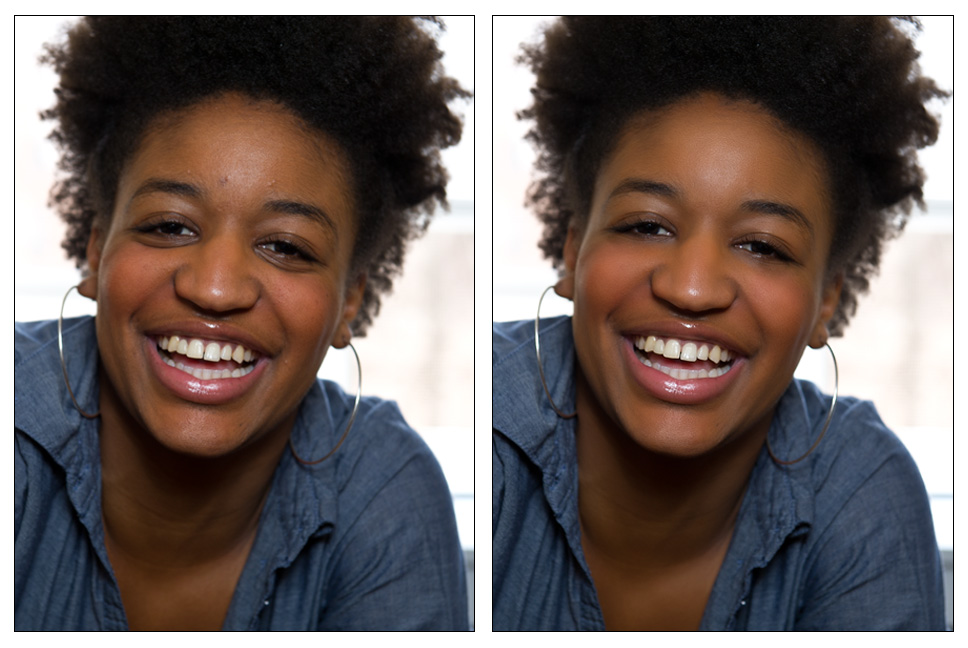
I have been asked many times if I retouch my work. The answer is complicated in a sense because although I don’t like to retouch, I still want my clients to look their best when they get their portraits. So it comes down to more of a question of how much is too much.


We all know that in magazines like Glamour, Vogue and most of the celebrity magazines the images are retouched and often to the point of fantasy. It is easy to go overboard when retouching someone. When the natural texture of the skin is taken away and the skin looks like porcelain, it is overdone. If the photographer or retoucher makes someone look so ‘perfect’ that you wouldn’t know the person if you met them on the street then they have gone too far.


At the same time if the client wakes up the day of their portrait session with an acne breakout you don’t want them to look less than their best either. That is where retouching can be a benefit; it is not however the only time that some retouching needs to be done.  An example is my recent shoot with Sydni, a beautiful young lady who has a natural beauty that shouldn’t be altered or hidden by retouching.

Read more

Opposites

The old adage that opposites attract remains true in all aspects and especially in photography. Powerful images from the likes of Helmut Newton and his industrial women series, Robert Mapplethorpe from his powerful nudes to his delicate orchids in B&W and many others show how something soft and beautiful when placed up against a contrasting opposite not only stand out but scream to the viewer about how a harsh background makes a soft subject jump out at you.


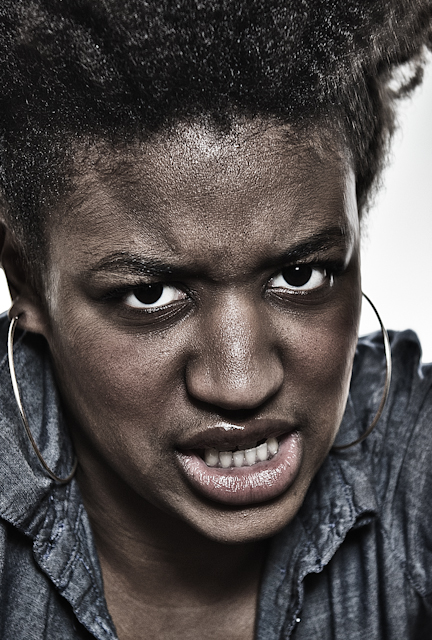
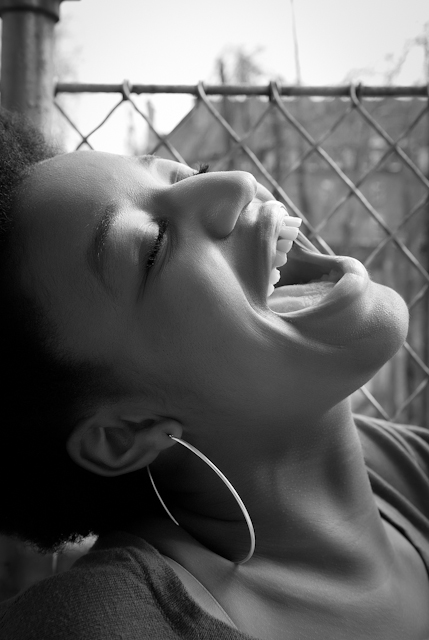
I recently had an experience with a couple of my models that happen to be roommates. The two young women are also my neighbors and I asked both to model for me. These two women are both full of energy and life; they both are very attractive in different ways. I had a certain expectation of how each shoot would go but as this was a “fun shoot,” meaning it was more just for each of us and no specific results were needed, I decided to start each out in a certain direction and then just let it go and see what we got for the final shots.


I was not surprised by the energy and life they both put into each separate session. These women are fun loving and full of positive energy. I did have a certain expectation in my mind though of where the shoot would go and boy was I wrong! The one that I thought would be all beauty and glamour turned out to be the intense dramatic images and the one I thought would be the lighthearted jump around and get goofy showed the beauty side. Not to say we didn’t get goofy, she made some faces in the beginning to get relaxed and those shots were fun and turned out well. However the images that stood out after the shoot were of a more sedate side of the model. Her intensity and strong features just screamed glamour.


I think the highlight though was the fact that each of them can do both just shows how even individuals can be almost polar opposites in life. The images of the women turned out better than I had anticipated and we were all very pleased with the final results. In fact both of their images are being included on some of my new marketing materials. Even my success coach (Beate Chelette) says that my new promo cards are some of the best I have done to date.


In case you like the images and the models, well, they will model for others but I have told them that I have to be their manager. ;-)  A huge thank you to my models, Brooke and Sydni!