My Client’s Advocate


Every once in a while things don’t go as planned. I was recently contracted for a shoot for an advertisement in a rather high end magazine. My client is the advertiser and not the magazine but the magazine is who connected me with the client. My client wasn’t sure he needed a professional photographer; he was one that thought he had a camera, and he could take the images himself and they would be ‘good enough’ for the ad. After a long consultation and some negotiation, he was willing to “give me a try.”


The shoot went well and the images were more than the client had anticipated. He was very happy with the results, in fact I would have to say that he was actually impressed with the differences between what a professional photographer could do compared to what he himself could produce. That was when he realized that ‘good enough’ probably wasn’t.


All is going well, I was paid, the images were delivered to the client and the magazine. My part was basically done; so I thought.
Now let me take a moment here to clarify; although the magazine had referred me to the client I had never done any work for the magazine before; in fact they had found me via my website and some referrals. I did not have a relationship with them prior to this project.


This past Friday evening I get a call from the client and he is furious!  He is almost screaming on the phone telling me that he had received a box of copies of the magazine and his ad looked horrible!  The images were all dark, lacking detail and did not represent him as he intended. He was ready to call his lawyer and have the contract voided and start a legal battle to get his money back, which I might add wasn’t a small amount.
 

The client went into detail about how the images were not representing him well and in fact he felt I should be angry too as they didn’t show my talent to capture the feelings he felt the original images did. He knew that I did not have a relationship with this publication prior to this project and felt that I should be as angry as he was because how was I going to get more work from this magazine if my images “looked like crap.” He was right too; if my work is the ugliest in the magazine it is highly unlikely that I would get any further referrals from the magazine.


The fact that my client was not happy is more of an issue for me than anything else. A positive review from him is likely to do more for me than how the magazine feels. More importantly, my client is pissed and that is just not acceptable to me, period.


But I am just the photographer, what can I do? This is an issue between the client and the magazine. In fact I could do something.


I had the client overnight a copy of the publication and I took a critical look at the ad and yes, the representation sucked. The images were dark, fuzzy at times and just generally looked horrible. So I did what I thought would be the next right thing, I called my contact at the magazine and I asked them what happened.


My contact had not yet seen the printed version and referred to the soft proof that she could see on her computer. She forwarded me a copy of the proof while we were on the phone and I let her know that the files she sent me in fact did not in any way represent what I was seeing in print. She then in turn referred me to the manager of their production department and my questioning began all over again.


To make a long story short, or at least not so long, After comparing files, computer profiles, processes and anything else we could think of it was finally agreed that the print version didn’t match the electronic version and that something needed to be done to make it right.


I offered the magazine an additional 30 images to choose from and my time and knowledge to work with them to create a new advertisement for my client. I would be the advocate for my client and I would use my print experience to help create a new ad. They in turn offered to run an editorial about my client’s product next to a full page ad that we would compose together. This would give my client greater exposure than originally planned, gave him a discount of more than 60% on his previous contract, and should override any negative exposure that may occur from the copies that were already on the street.


My client wasn’t sure how to negotiate with the publication when the project was less than expected and was put in a place where he was not sure how to proceed. He was about to do what he thought was right and bring in legal counsel. Instead he reached out to the person he thought might have an idea on how to handle the situation, even if it was more to assure him that the ad looked bad. In doing so, he brought in an advocate for himself and his business.


I didn’t charge the magazine or my client for any of this. I wanted to do what was right for my client and for everyone involved. In doing so I was able to help my client; I took a bad situation and made it a Win/Win/Win. The client gets a second ad with a two page spread for the cost of a half page ad, the publication gets a happy client and a minimal financial compromise, and I have two happy clients.


Being my client’s advocate is for me, just smart business.
Next Right Thing

I write about integrity, honor, and ethics all relating to business – specifically the photography business and how photography helps my clients. But what about me, Michael the man and Michael the Photographer: do I live these principles in my life?


I like to think that I do and that these characteristics in business come from the personal side of me. I want to always do the right thing; to stick to my principles. I have a way of trying to do that every day and that is by doing the next right thing. Doing the next right thing is not an easy task sometimes. In fact doing the next right thing means that I have to be paying attention, for starters. How else am I going to even recognize it?


Not all that long ago I worked in the corporate world at a Fortune 500 company and I made a rather good salary. Life was financially comfortable and all the bills were paid. I maintained a basement studio in my home and I did my photography as a part time business. My goal was to learn and grow as a photographer so that someday the photography would overcome the corporate income and I could branch out on my own and leave that rat race.
Life has a tendency to force your hand at times and that is what happened to me. Due to corporate politics I was forced out before “I was ready.” To make a very long story short, I had the opportunity to let a situation pass and go seemingly unnoticed or I could report it to the chain of command. Reporting it to my higher-ups meant that there was a good chance someone was going to lose their job. That someone turned out to be me. But it was the right thing to do and it is was in line with the ethics the company felt was one of their core values.


I could have fairly easily gotten another position in the corporate world and it very likely would have paid a similarly salary and my photography business was nowhere near fully supporting me and my (now) wife. Yet deep inside myself I knew that if any situation that came up like the last one it would cost me my job again. Even though I was doing the next right thing I was the one paying the price and the corporations were sacrificing something for profits. That ‘something’ was not something I was willing to sacrifice, at least not sacrifice and have an easy time sleeping at night.

So what to do: go back into another position that will cost me my honor, which I place higher than anything else, or take the difficult route of building my own business doing what I love anyway? As you can see by reading this I chose the latter. I preserved my principles and my ethics but I lost my house and studio. I lost many of my material possessions, my 401k and most of my savings too. Now every day I work to better myself, my skills and my business; I compromise nothing and I stand tall knowing that though it is a difficult path full of uncertainty and financial doubt, I am doing the next right thing.


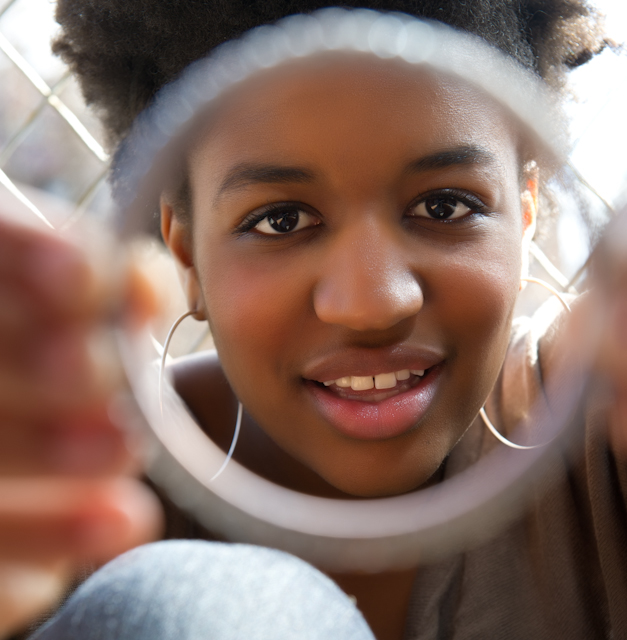
Making this choice was both the hardest thing and the easiest thing I have ever done. On the one hand I am my own boss; I get to work with wonderful people like the woman in the images above. On the other I never know where the next job is coming from or the next month’s rent, I went from 8 hours a day, 40 hours per week to an average day of 15 hours and a 100 hour work week. But I know that what I do for my clients is the right thing to do. They get the work they need, they get the value I promise and they will rarely have someone work as hard for them as I will. And when I lay down at night next to that wonderful woman who supports me in all that I do, I know that I will rest well because I will continue tomorrow doing the same thing I did today. I will do the next right thing.

The Handshake

I recently shot a home in the Poconos and the owner, a self-made man, had built his business on handshakes. He had learned early in life how to read another person and know if the person was a person of their word. If he felt they were he would make a contract sealed with a handshake. If he said he was going to do the job, he did the job and he did it on time and at least at the level of quality promised.

The gift this man had was not a sixth sense or some magical ability. This man, we will call him ‘Al’, knew from an early age that a promise and a bit of hard work could take him far. It is questioned if he ever broke a promise or if it was even possible for him to do anything that was anything less than honorable and ethical. No one I have met has been able to remember a time that Al didn’t keep a promise.

Over time, Al became known for his word and his handshake. He would get business simply because if he said he would do the job you knew it would be done right and done well. Every time on every job he did whatever it took to get the job done right, on time and to a level of perfection few others could achieve. Al is a man of ethics.

Ethics. Corporations teach it to their employees; Some even make it a core value and insist that every employee live ethically. Yet not a week goes by that you don’t hear about someone that is arrested, fired or disciplined for acting unethically.  But how many people, companies or governments are truly ethical? Can they live up to it if they have the chance to benefit from relaxing the ethics a just a little?

Our guy Al never compromised his ethics. He came from a humble background in a large city and never compromised. By sticking to his beliefs and doing the right thing Al made himself into a wealthy man. He is a man that lives as an example to others.

It is my belief that you have to trust people. You have to work an honest day’s work and not be afraid to admit errors, and be willing to correct them when they happen. You have to be willing to do the next right thing no matter what. Perhaps doing the next right thing is going to cost you some business today but in the long run it will get you more business.

One of the most powerful things in business today is a referral from a previous or current client. But a referral that speaks to how ethical you are speaks even louder, and to more people. We are all human and we all make mistakes, what separates us is how we handle mistakes and what we do with them. Do we overcome them or do we let them bring us down?

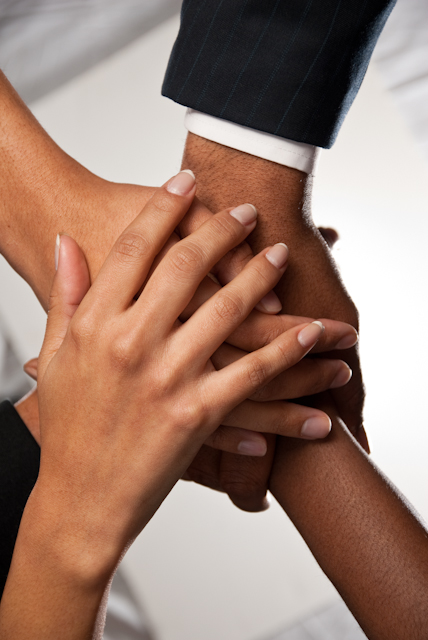
My goal in life and in business is to be honorable, ethical and trustworthy. I treat my clients the same way I treat my friends and I try to never make a promise I can’t keep. I am human and sometimes I make mistakes but I try to own up to them and I try to make them right no matter what the cost. Something I learned from Al and others like him is that …every handshake has meaning and every handshake has value.

Catching The Client’s Eye


Recently, in a photography networking group I was asking for some type of marketing research that would help show you how quality photography can increase your ROI on any given project or campaign. Unfortunately there seems to be very little actual research done on the subject. It seems that it is just accepted that photography helps capture the viewer’s attention.


Luke Copping responded to my post asking for statistics, information, anything. Luke is an extremely gifted photographer from Canada now living in Buffalo. If you want to see images that catch your attention check out his website at www.lukecopping.com.  I just met Luke a week ago at ASMP’s Strictly Business 3 (SB3) conference in Philadelphia and Luke is the kind of photographer that is good at getting your attention. When I saw his reply to my post I knew right away that the information would be useful.
Read more

Keep It Simple (Stupid)


Complication is easy – While simultaneously applying downward pressure and twisting in a counter clockwise motion to create upward movement, creating a release of pressure and separating multiple items bound together. Also known as unscrew it. However, anyone who has tried to loosen a screw with a stripped head knows that simple isn’t always that easy.


So just how does one keep it simple? Obviously that entirely depends on what the ‘it’ is. In my case it’s usually photography or getting the right image for you. So what if the image you need is complicated? That is where experience comes in; anyone can make the simple complicated but experience is what can make the complicated simple.


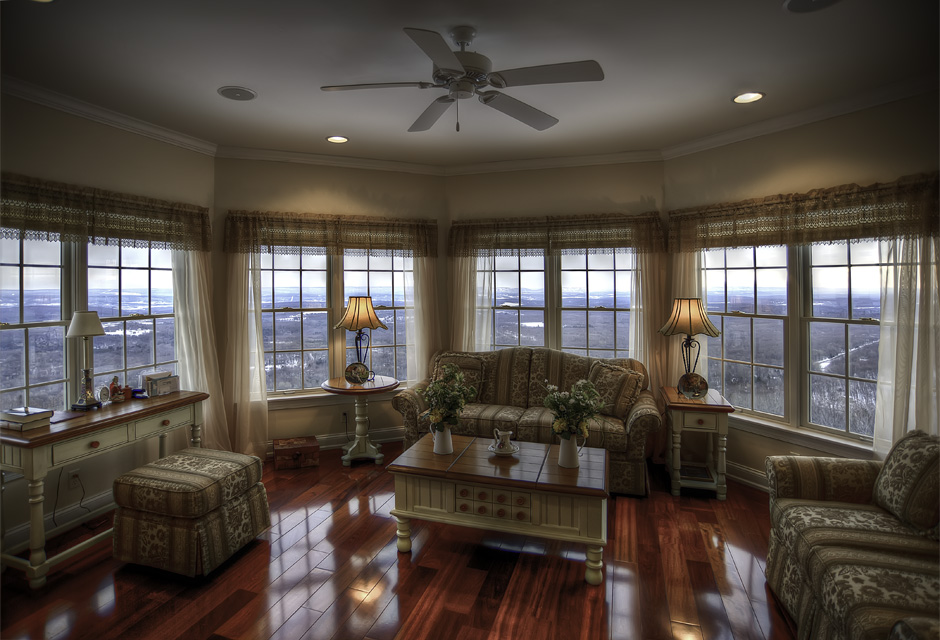
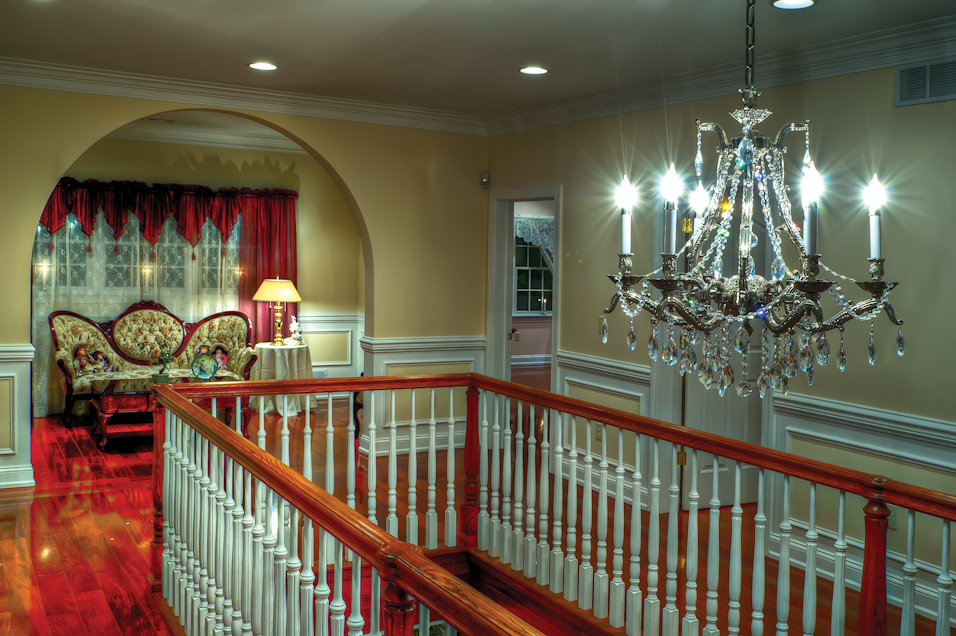
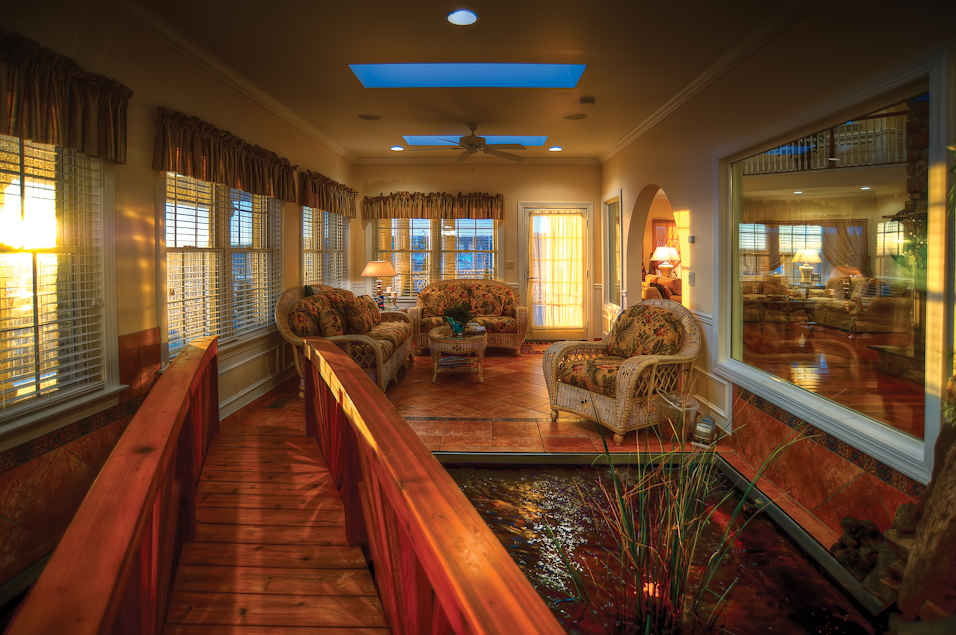
Recently I was contracted to photograph a large mansion in the Poconos of Northern Pennsylvania. This home has 6000 square feet of living space just on the first floor. Included are bathrooms, sitting rooms, a large foyer, an entertainment lounge, a koi pond (with huge koi) with a bridge and 3 meter waterfall, dining room, formal living room, two bedrooms, mud room, hot tub and full size indoor heated salt water pool, not including upstairs or the full basement! To capture the ambiance of this home is not an easy task.


I have some experience capturing the mood and feeling of an estate like this as I’ve shot quite a few of them. I have an approach to shooting large estates and the process is very similar to all the projects I do. The first and foremost thing that I do is find that ‘feeling’ and to do this it’s best to start by talking, at length, to the client. In most cases a home like this is the pride and joy of the people who live there and often they are more than willing to share what means the most to them.


Once I have an idea of what ‘s special about a project I need to survey it and that means taking  time to walk through it and determine the flow of the project or, in this case, the home. Some estates will strike you as soon as you pull in the lane: Winterwood Estate in CT was like that and the flow of the property was as important as the structures on it. In the Poconos it was a bit different though: it wasn’t the property itself or even the beautiful home, it is how the home interacts with the view from atop a mountain. From almost every room there was a view of the valley below or the ski resort across the valley.

This meant that whenever possible I needed to include the views and vistas. My experience has shown me how to do this in a way that shows both the home and the view without compromising either. By walking through the home I was able to experience what the homeowners enjoy every day with their morning coffee or their evening meal.


What I did was take a very complex job and I broke it down into pieces, learn, observe, review, survey and then formulate a plan of action. This is what I do with all my work whether I am shooting a multimillion dollar estate, simple portrait, an event or a major advertising campaign. Depending on the type of project the length and details of each step may change but the same simple formula is applied each time and I get the results my clients want, every time.


For me it isn’t just to keep it simple, for me it is Keep It Simple Stupid and that is why I call it my “K.I.S.S.” method.  Let me know if you need a KISS. 😉


You can see 50+ images of the home at www.19whisperinghillscourt.com and if you may be interested in purchasing it, contact me and I will get you in touch with the owners.

How To Get A Good Portrait


Let’s say it is time for you to update your profile and you want to get a good headshot. There is a problem though: you don’t feel you are photogenic at all. Every picture ever taken of you is horrible!  Half the time you blink or that chipped tooth is showing, or worse!  Imagine that you set an appointment with a photographer and OMG it’s a zit as large a Kansas and its right in the middle of your forehead! Nooo!!!!


First thing you want to do is go hide in a dark closet where night vision goggles set on high still can’t find you. Anything but be in front of a camera! Ick!


Well, the first thing you actually want to do is relax and take a deep breath. “But this zit…” you say?  Photoshop I say! Blemishes and imperfections are simple to remove from an image and any photographer worth their weight is going to fix those little things. In fact many photographers will ask you how much retouching you would like. If they are good at their craft they will not only make you look natural and look good, they can make you look 14 again if you want them too. However, for a good profile image you want to look natural.


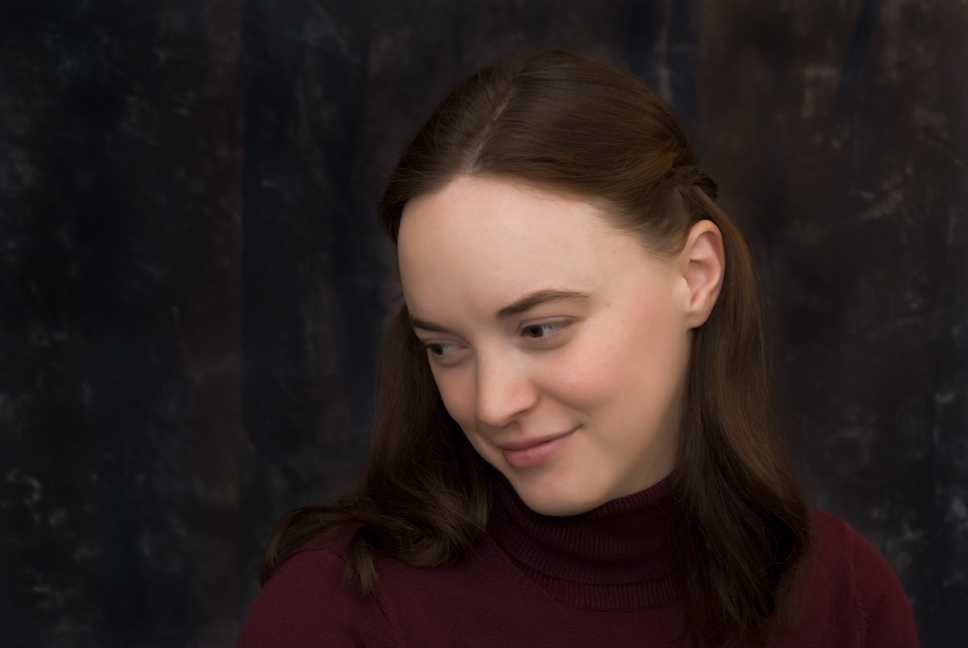
This “model” feels she is not photogenic. I disagree, but then again I may be biased, I married her.


Many people think that if they have their images retouched they are going to look like some porcelain doll with skin as smooth as a lake on a still day. A good photographer and/or their retoucher is going to correct things like the ‘North Star Zit From Hell’ and make you look your best but not unnatural. After all the ideas is to look like you. What if you actually have to meet these people who view your profile?  You need to be recognizable, hence you have to look natural, that means you have to actually have pores and texture to your skin.


Once you have found a photographer take a little time to get to know them. You will naturally be nervous and if you get to know the person behind the camera chances are you won’t see the camera as much.  Also, talk to the photographer while you are in the studio; have a conversation during the shoot itself. This will further your ability to relax and increase the likelihood of a pleasing, if not fantastic, portrait.


Another thing that people worry about is wardrobe. There are a few things that can make that easy too. Stick to contrasting colors. Colors that match your skin tone will wash you out and make you look ill. By wearing colors that compliment you and contrast with your skin you become the subject of the image not your shirt or blouse.


Also, whenever possible, try to wear solid colors. Patterns, especially small print and busy patterns don’t photograph well by themselves let alone on you. If you only have clothes with prints stick to larger patterns so that they don’t distract too much.


When it comes to hair (not an issue this bald photographer usually worries about) men should not have a haircut the day of the photo shoot. Try to have one the week or at least a few days prior. This will allow the hair to lay in a more natural way and again, leaving the emphasis on you. Women can have their hair done the same day but it’s not a requirement.  The biggest thing is to have it natural. Women often have different regimes when it comes to the care of their hair and picking a time when you think your hair looks best will not only help you look good, but it will help you relax too.  The idea is to limit the ‘whispies’ and have your hair lie in a natural way not matter what your gender.


I have heard that some people think that studio lighting is not complimentary and that only natural light is the best way to get your portrait done. Poppycock! Good light is the key to a good image. It doesn’t have to be outdoors or at a window. In fact the sun is a very harsh and sharp light that can create strong shadows across your face. If you are having your partner or friend take your image they may not be educated in controlling light and that can lead to even more frustration trying to get that great shot.

If you just don’t think you can use a professional photographer, at least think about the following when lighting your image.


•                    Don’t allow harsh shadows to fall across your face, whether it is the sun or a bright light.

•                    Balance light on all sides of your face. This can be done with just a white sheet of paper or piece of poster board. Place it opposite the source of the light and let it bounce (hence the term ‘bounce card’) light onto the shadowy side of the subject.

•                    If you have two bounce cards, try to bounce some light directly into your face. Direct, but soft light will fill lines and blemishes on the face making you look younger naturally!

•                    If using a flash put a tissue over the flash to soften and defuse the light.


Remember to relax. Although it seems like the hardest part, especially if you feel you are not photogenic, it is the best thing you can do to create a good, if not fantastic, portrait. Tell the photographer the corniest joke you know, laughing helps not only you relax but your photographer as well. The more relaxed you are the more natural your image will be.


All of these ‘tricks’ are things that a good portrait photographer not only knows but has studied and practiced. (The art of light is what photography is all about.) By learning these things we have trained ourselves how to help you look your best in your portrait. It’s what we do!


Did I tell you the one about when two dogs walk into a bar…

Hiring Well

I don’t know a single business person that hires the cheapest candidate available. Each candidate is hired based on their qualifications, knowledge and (perceived) abilities.  You review resumes and references and then you start the interview process. If the best fit is close to the salary range you have reserved for the position, you hire them; if not you negotiate to see if a compromise is possible. After all, you are going to be working with this person for a long time and you want them to fit into your business culture and atmosphere. It is the smart thing to do.


So why not use that same business sense to hire a vendor?  In many cases vendors are chosen strictly by the price of their bid. In many cases business owners/managers are so concerned about the immediate spend that they miss the value of the proposal and product offered. Does this mean that the cheapest is always the best deal?  In fact most of the time the “best deal” is not a good value at all.


In my last post, ‘The Value of Quality,’ I used the automobile business as a scenario to make my point. To carry that forward let’s look at another vehicle, the Yugo. Yeah I hear all of you groaning. The fact of the matter is that towards the end of the Yugo’s life in the US there was a deal where you buy one and get one free (BOGO).  It was a hell of a deal but was it of any value? Not really. Parts were almost impossible to find, the company was obviously not going to be around long and the cars didn’t have a good reputation at all. If you went for the BOGO your only hope was to use the second one to keep the first one running.


So why is it that many still go for the lowest price?  If I am going to fly to the moon I don’t want the cheapest rocket, I want the safest and most reliable. I want to come back too! There may be water on the moon but there isn’t much to eat.  Now if that rocket also is the least expensive, bully for me! But cost is not the major factor; quality of service and quality of product are.

When thinking about your photography needs, or any service for that matter, you need to consider the ROI and what is going to give you the best return on your investment. That is not calculated by just price either. Just a few of the contributing components are: lifespan of the resulting products, customer service, delivery schedule, quality of the service and product, etc. Let’s face it: if you don’t get your images on time and you miss a deadline what is the resulting cost of that mistake? If you are using the resulting images for advertising and they don’t convey your message properly what good are they? If your competitors have a similar product or service and their images shine a more professional light on them who is going to win the majority of clients?


Now if your images are more professional, better looking, of higher quality and have a longer usage period then you are getting a great deal!  You spread the cost out over a longer period, you gain more business during that period, you give your company a better presence in the market and you will probably get more clients.


Overall you have to decide what the best value is and you have to make compromises. When hiring that candidate you probably won’t negotiate a salary that is out of your total budget. However, if the candidate is going to increase cash flow, chances are they are worth a little more than you plan especially if you can more than recoup that investment in the long term.


So the next time you are going out to bid a vendor, especially a photographer, give them a call, interview them, check their references and see what the real value is and I will bet that you will work with the one that gives you the best return on your investment even if they aren’t the cheapest.

The Value Of Quality


In past articles I have written about when good enough isn’t, how to save money with photography, integrity, quality service and a lot of other things. So what is the message this week?  In a word, quality.


What value does quality photography have to the average client? Whether they realize it or not my clients want it, need it, and, in fact, they require it.


Advertising, corporate image, marketing, all require that you get your message out there. It takes time to build a brand that creates an image of quality and value for the money spent. If we look at the auto industry we can see perfect examples of what branding can do for a company; how putting forth a positive image can make or break you.


It doesn’t matter what brands I name, Hyundai, Toyota, Chevrolet, Chrysler, BMW, Mercedes, Ferrari, all make you think of an automobile.  But, if you look at each of those names, each conjures up a completely different image and gives you a completely different type of vehicle and a completely different feeling.


Read more

Save Money With Photography

As a professional photographer I hear all the time “I have a digital camera; can take the pictures myself. Why should I pay you?”  In fact I was speaking to a potential client yesterday who said exactly that. He is a retired developer who started out as a painter doing very high end residential painting. He has been known to charge as much as $25,000 or more to paint a New York apartment. He understands the idea of a high end service, but more importantly he understands the need for high quality work.


As with painting high quality photography can save you a lot of money in the long run. In the short term, when done correctly and done at the right time, it can make you money too. As my client pointed out it may take him weeks to prepare a space to be painted and painted properly. Some say why bother?  The prep work isn’t seen “once you slap a coat of paint over it.” That is sometimes true, for a little while. Over time the lack of preparation can allow heat and moisture to affect the paint and how the paint binds to the surface eventually leading to discoloration, pealing and flaking. Then the prep work, or lack of it, does matter; the initial job may look OK, not fabulous, but OK and the overall quality begins to suffer. Before you know it you have to strip away the ‘old’ paint and start over.


My clients (not this one though) will ask why I need to survey a space before I shoot, or they ask why I can’t just go in a take a few shots and call it done?  Sure I can do that but in time, most likely a rather short time, the images will lose their appeal and become dated, dull, and boring. Yet if I prepare for a shoot properly and I work to capture a timeless image I can create an image that will still wow people 100 years from now. Unlike a painter though, my preparation can easily go unnoticed.


There are thousands, maybe millions of professional photographers. But quality photographers are a bit more rare and they almost always are more expensive in the beginning. A quality photographer will spend time, years often, preparing for your photo shoot. Those years are spent learning composition, tone, looking at all the details of an image, the shadows, and most importantly, studying light.

Learning light is the hardest thing there is in photography. It is also probably the most important thing we can learn. I can go into a thousand words and not even scratch the surface of light but photography is the art of capturing light. To capture it you have to understand it and understand how it works; how light and the lack of light affect the subjects you are trying to capture. Learning light takes time and more importantly it takes the ability to see light differently than most people. That is the beginning of the preparation.


Preparation for capturing the image you want and/or need is a matter of taking those years of learning light and composition and incorporating that into generating the image that will be as timeless as possible.


So how does this save you money?  We, just like the quality painter whose work need not be done time and time again and will last for a good long time, so shall your images when done by a quality photographer. The images you will get from a quality photographer will do that as well: they will last a very long time. If the right image is created for you it can represent you and your company for years to come. This means that you will hire a photographer less often, though it may be a bit more money in the beginning, the timeless image will not need to be reproduced every six months, a year or more.


So what of the images that need to be created more regularly? How can quality save you money in that case? Simply put they represent your products, your services and ultimately you. Those images that need to be created regularly can be done at a more cost efficient rate when you chose one quality photographer. That person can streamline the process and produce the images you need regularly and reliably. If the quality of their services is consistent, so is your reputation.  And what costs more to recreate than your reputation?


Those that value quality, hire it.

Ask Not…


Fifty years ago tomorrow one of the most well-loved presidents of the United States said, “Ask not what can your country do for you but what can you do for your country.” It is a matter of debate as to if John F Kennedy was the first to say those words. Cicero said something very similar in the first century BC; similar quotes have been uttered ever since. Credit most likely belongs to Oliver Wendell Holmes who said, “Recall what our country has done for each of us, and to ask ourselves what we can do for our country in return” in 1884.


So what does this have to do with you or me today? More than we all can imagine. It is time, as it always should be, to give back to our society and to our fellows. We can do that by joining the armed forces, giving to charity, working for a common cause, helping those less fortunate than ourselves; we can even give back by just being honest on our taxes.

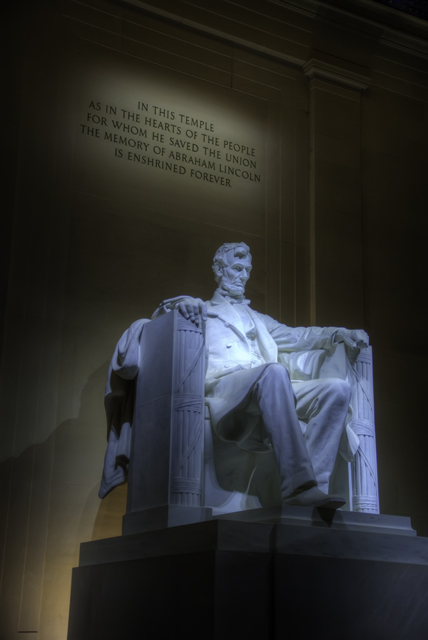
Lincoln Memorial

Lincoln Memorial

The question is not how; that is as different as each reader of this blog. The true issue is why should we give back to our country? Aren’t the politicians and the government here to serve the public? In fact they are here to serve the country as well. (Someone should remind them of that BTW) But you want to know what you get in return for all this giving. The answer is simple; Security.


By giving back, by helping our friends as well as our foes, we create a country and a world that is secure in its own growth. By taking time from our lives to give to the whole we begin to support the network that holds us together as a society. You see it in nature all the time. No single honey bee can make a hive, nor can it make the honey. It takes thousands of bees to make a hive and more to create the honey. Ants work together to build a colony; monkeys, chimps and gorillas build complex societies to assure that all can be safe from predators and have plenty to eat. Even predators form prides to support each other.


So why is it that we as the most developed species are always asking, “what have you done for me lately?” Perhaps it is time to stop asking what is different about each other and start asking what is it that I have in common with him or her or them. Perhaps when we see the similarities and let go of the prejudice, greed and fear, will we all see that what each of us has to offer.


Where do we start? How do we do for our country and our fellows? It can be as simple as opening the door for the person behind you; giving a coworker the benefit of the doubt and helping them complete their work. The point is that each of us doing a little will result in all of us doing a lot.


Today I challenge you. Take a few moments to see the similarities between you and the person nearest you. Then say to yourself, Ask not what this world can do for you, ask what you can do for this world.